Detail: Your final is a self-directed project that fits within the constraints of this class and its subject matter. You will submit a proposal (worth 3% of your final grade) in the form of a Film and Digital Media Fund (FDMF) application.
Submit via: Learning Suite + in class
File type: Determined by the artist, but it should be a universally standard file format
To culminate your thinking and work, the final project is a way to show what you have learned, the depth of your thinking, and the new skills you have honed.
Brief
Your final is a self-directed project that fits within the constraints of this class and its subject matter. You will submit a proposal (worth 3% of your final grade) in the form of a Film and Digital Media Fund (FDMF) application through the department for possible funding. If you want to pursue a more analog and undocumented final project, talk to the instructor. Your grade is not tied to the funding—i.e., a good grade does not mean funding, and funding does not mean a good grade on your proposal.
Your final project should be appropriately ambitious to make full use of the time given, showcase what you have learned in this class over the semester, have a strong underlying concept that is articulated in your proposal, and be time-based. The result can be an object, a performance, an event, a sound file, a video, or a hybrid.
Have a central concept that is grounding and informing your work.
Decisions should be made in the interest of the work and not just out of convenience. For example, if you are creating an immersive sound piece, a multi-channel audio installation might make more sense than just stereo headphones.
Consider the amount of time you are given to work on the final. It is expected that you make full use of that time to realize a complex and deeply involved project.
Budget 5–10% of your time as slush in case of emergencies, technological glitches, etc.
Consider what equipment you may need to check out from the stockroom in advance. Remember tech checkout is first-come-first-served, so you may want to reserve equipment in advance and do not wait until the last minute when everyone else is checking out equipment for final exhibitions and final projects.
Will you want to document this for your portfolio and/or as part of the project? How will you do that? What equipment will you need? What lighting conditions will you require?
Equipment
Be mindful of the equipment you use, the requisite storage cards, and types of inputs to accommodate different microphones or devices.
Late Policy
No late work is accepted after the final critique. If you are late to the final critique, you will lose 5 points.
Grading
Assignment grades will be based on the following:
Conceptual Concerns (40%)
Student demonstrates evidence that they understand and inventively integrate conceptual concerns. The student’s research is evident and ample given the allotted time.
Excellent: Student demonstrates conversational familiarity with the material—making interesting connections between material.
Average: Student is able to relate material, but not do much interesting with it.
Below Average: Student struggles to demonstrate a grasp of the material and shows no facility in connecting ideas or new thinking.
Execution (40%)
When selecting a thesis or POV, the student is able to succinctly and plainly build a case using good storytelling techniques.
This includes proper spelling, punctuation, sentence structure, grammar and formatting for written assignments; and annunciation, confidence and focused arguments for oral assignments.
Excellent: Student understands modes of writing and presentation including style guides and is able to nimbly employ these tools in their writing and speaking.
Average: Student makes some stylistic and formatting mistakes by ignoring provided guidance.
Below Average: Student repeatedly makes the same mistakes and ignores instructor input and suggestions.
Assessment/Critique (10%)
The student will produce a self-evaluation for each art project including the strengths and weaknesses of a given work and plans for future improvement. This will also include an accounting of time taken. The student will also be present for and participate in group critiques of projects.
Excellent: The student thoughtfully and honestly engages in the self-reflective process of critiquing their own work and efforts. The student enthusiastically engages with group critiques, seeking ways to offer constructive feedback to other students.
Average: The student performs a cursory and surface-level assessment of their work and efforts. They make neutral comments during the group critiques and do not fully engage.
Below Average: The student demonstrates an inability to honestly engage with their work as it exists in the world, and does not adequately participate in group critiques, or is absent/tardy.
Following Instructions (10%)
The student adheres to the guidelines provided for the course and the assignment. If the paper has a particular framework, the student adheres to that framework. If an assignment is to be submitted as a Word doc on Learning Suite, the student does not email the instructor a PDF.
Excellent: A detail-oriented student who takes instruction and fastidiously executes it within their work.
Average: A student who misses some details because they didn't read instructions thoroughly or take proper notes when instructions were given.
Below Average: Student ignores basic instructions and guidance given for assignments.
Learning Outcomes Addressed
Digital Art History and Practices
Students will develop a working knowledge of digital art practices, including an understanding of the theoretical implications of art in a digital age.
Skills
Students will develop the skills and resources necessary to realize a wide variety of digitally-based projects.
Project
Students will produce a body of work demonstrating a comprehension and engagement with the themes and concepts explored in class.
Development
Students will develop the skills and resources necessary to realize a wide variety of digitally-based projects.
General Practices
Students will develop a working knowledge of digital art practices, including an understanding of the theoretical implications of art in a digital age.
Production
Students will produce a body of work demonstrating a comprehension and engagement with the themes and concepts explored in class.
Video art is probably the most prevalent form of time-based art currently in use. Due to our ability to easily shoot and share videos given the prevalence of camera phones and video-sharing sites. As you can imagine, this was a little more difficult even just 20 years, and even then, digital/online video was still very low resolution. This is also a flexible form that can include standard video, animation, sound, photography, and more. It is also easily transportable, making it a great medium for young artists trying to get their work out into the world—you don’t have to pay framing and shipping costs.
Brief
You will produce a 3–5-minute video art piece that is conceptually based. It would be great if this can be an extension of your standard practice and themes, but you can also use this as a chance to experiment and branch out. Think creatively about how video might be produced according to your central concept. There is standard video, animation, screen recording, video collage (check copyright laws), a video slideshow, video games, and more.
You will present the video in class and submit the video via Learning Suite (upload or include a link to where the video is housed online—Box, Dropbox, Google Drive, YouTube, Vimeo).
You are also required to submit a self-evaluation along with your assignment, so leave enough time to complete the assignment and ruminate on your experience. 10% of your grade is based on your Assessment/Critique—this includes your self-assessment and participating fully in the group critique.
Submission Checklist
Tips and Considerations
Consider the time given for you to plan, execute, and document the project and come up with something appropriate and ambitious.
Ask yourself what you are hoping to accomplish with this project.
Set a production schedule for yourself to account to shooting video, organizing footage, editing it, and mixing the sound (if there is any).
Think critically before including any music in your video piece. This is a standard of Hollywood productions, but is often just to fill space. Only include music if the piece calls for it, and even then, you need to have the rights to use it in your video.
When engaging with people, consider where will be the best place to go, permissions you may need to be and film there, and what methods you will use to invite them to participate.
Consider the ethics of your interactions.
If people’s faces will be visible in the video, you will want them to sign a release form that you keep on file.
If your body is in the piece, you are performing, so what will that look like? Consider how you will be in the space and how much of a performance it will be or if it be more natural and unaffected. Will you be wearing a “costume?”
How will you capture the video and the sound? Do you need to have multiple cameras and/or microphones?
If your file is too large to upload to Learning Suite, put it on a cloud service and upload a link to that file on Learning Suite.
Experiment! Ask yourself “what if” questions and try out those ideas with quick prototypes. Don’t make the first time you try out the ideas be for the final production you are documenting.
Own your decisions. Don’t just make decisions based on convenience or laziness. Make choices that are informative for the piece.
Use the instructor! Ask questions. Seek input. Brainstorm with them.
Equipment
Be mindful of the equipment you use, the requisite storage cards, and types of inputs to accommodate different microphones or devices.
Late Policy
You will lose 5 points per day (out of 100) for each 24-hour period your assignment is late. You will also lose points for not participating fully in the group critique.
“Depending on your room size and budget, lighting your green screen can be very tricky. In this second video of my green screen tutorial series, I show you how to best light your background and your subject. No matter if you have a big studio available, or a tiny office.”
“Join Content Creator Motoki as he shows you his favorite tips and tricks for mastering the green screen. Ever heard of a blue screen? In this video, he'll show you when you might want to consider using a blue screen instead of a green screen, and how to edit your awesome effects in PremierePro.”
“This is a short video detailing the basics of P-Frame Datamoshing.”
Grading
Assignment grades will be based on the following:
Conceptual Concerns (40%)
Student demonstrates evidence that they understand and inventively integrate conceptual concerns. The student’s research is evident and ample given the allotted time.
Excellent: Student demonstrates conversational familiarity with the material—making interesting connections between material.
Average: Student is able to relate material, but not do much interesting with it.
Below Average: Student struggles to demonstrate a grasp of the material and shows no facility in connecting ideas or new thinking.
Execution (40%)
When selecting a thesis or POV, the student is able to succinctly and plainly build a case using good storytelling techniques.
This includes proper spelling, punctuation, sentence structure, grammar and formatting for written assignments; and annunciation, confidence and focused arguments for oral assignments.
Excellent: Student understands modes of writing and presentation including style guides and is able to nimbly employ these tools in their writing and speaking.
Average: Student makes some stylistic and formatting mistakes by ignoring provided guidance.
Below Average: Student repeatedly makes the same mistakes and ignores instructor input and suggestions.
Assessment/Critique (10%)
The student will produce a self-evaluation for each art project including the strengths and weaknesses of a given work and plans for future improvement. This will also include an accounting of time taken. The student will also be present for and participate in group critiques of projects.
Excellent: The student thoughtfully and honestly engages in the self-reflective process of critiquing their own work and efforts. The student enthusiastically engages with group critiques, seeking ways to offer constructive feedback to other students.
Average: The student performs a cursory and surface-level assessment of their work and efforts. They make neutral comments during the group critiques and do not fully engage.
Below Average: The student demonstrates an inability to honestly engage with their work as it exists in the world, and does not adequately participate in group critiques, or is absent/tardy.
Following Instructions (10%)
The student adheres to the guidelines provided for the course and the assignment. If the paper has a particular framework, the student adheres to that framework. If an assignment is to be submitted as a Word doc on Learning Suite, the student does not email the instructor a PDF.
Excellent: A detail-oriented student who takes instruction and fastidiously executes it within their work.
Average: A student who misses some details because they didn't read instructions thoroughly or take proper notes when instructions were given.
Below Average: Student ignores basic instructions and guidance given for assignments.
Learning Outcomes Addressed
Digital Art History and Practices
Students will develop a working knowledge of digital art practices, including an understanding of the theoretical implications of art in a digital age.
Skills
Students will develop the skills and resources necessary to realize a wide variety of digitally-based projects.
Project
Students will produce a body of work demonstrating a comprehension and engagement with the themes and concepts explored in class.
Development
Students will develop the skills and resources necessary to realize a wide variety of digitally-based projects.
General Practices
Students will develop a working knowledge of digital art practices, including an understanding of the theoretical implications of art in a digital age.
Production
Students will produce a body of work demonstrating a comprehension and engagement with the themes and concepts explored in class.
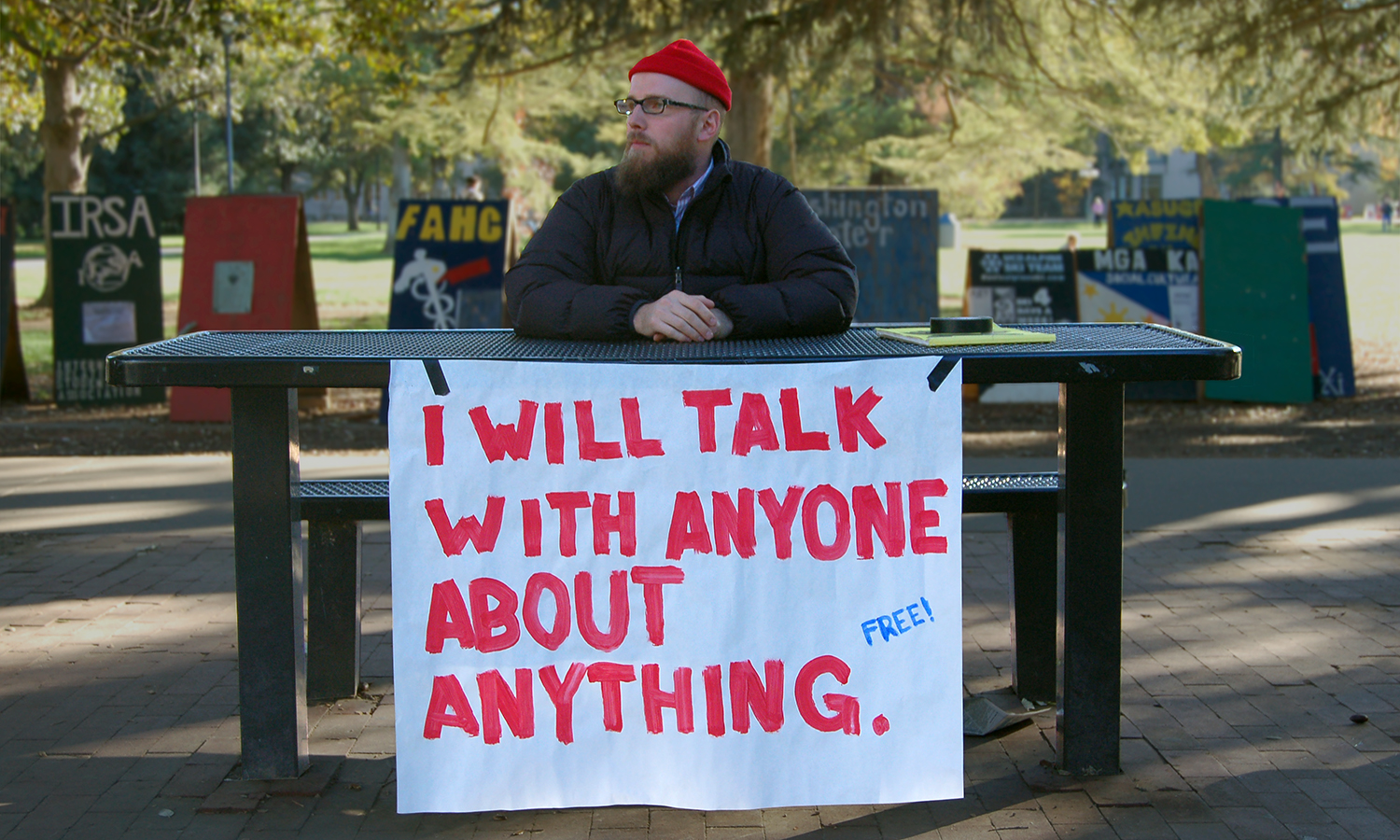
Social Practice has become a popular branch of performance art, with some universities offering it as a discipline. It moves beyond theatricality to direct social engagement and involvement. This methodology can move beyond time-based practices to encourage thinking about work that is about a thing vs. work that is a thing. For example, a painting can address a societal or political topic, while not directly effecting change, whereas a social practice project may directly engage the public in making a change.
Brief
Your social practice project should involve people as the medium or material of the work, whether that’s their debate, collaboration, participation, or social interaction. People’s participation should fall under directed, creative, or collaborative. Preference should be given to engaging a public you don’t know, but if social anxiety keeps you from working with strangers, you may work with people you know.
You will conduct your project outside of class and visually document it. You will then submit via Learning Suite and present in class (three to five minutes) a video document of your project that you have already conducted. This video should include text and/or a voice over that explains the project’s concept and execution, so it is clear what the extent of your work is.
You are also required to submit a self-evaluation along with your assignment, so leave enough time to complete the assignment and ruminate on your experience. 10% of your grade is based on your Assessment/Critique—this includes your self-assessment and participating fully in the group critique.
Submission Checklist
Tips and Considerations
Consider the time given for you to plan, execute, and document the project and come up with something appropriate and ambitious.
Ask yourself what you are hoping to accomplish with this project.
When engaging with people, consider where will be the best place to go, permissions you may need to be and film there, and what methods you will use to invite them to participate.
Consider the ethics of your interactions.
If people’s faces will be visible in the video, you will want them to sign a release form that you keep on file.
If you are doing something on campus that can be interpreted as an “event” or “booth,” you may get shut down. To play it safe, you may want to not attempt something on campus.
If your body is in the piece, you are performing, so what will that look like? Consider how you will be in the space and how much of a performance it will be or if it be more natural and unaffected. Will you be wearing a “costume?”
How will you capture the video and the sound? Do you need to have multiple cameras and/or microphones?
If your file is too large to upload to Learning Suite, put it on a cloud service and upload a link to that file on Learning Suite.
Will this be a one-on-one experience that is more intimate, or for larger audiences and space? How might that consideration impact the creation of your object and your recording of it?
Experiment! Ask yourself “what if” questions and try out those ideas with quick prototypes. Don’t make the first time you try out the ideas be for the final production you are documenting.
Own your decisions. Don’t just make decisions based on convenience or laziness. Make choices that are informative for the piece.
Use the instructor! Ask questions. Seek input. Brainstorm with them.
Equipment
Be mindful of the equipment you use, the requisite storage cards, and types of inputs to accommodate different microphones or devices.
Late Policy
You will lose 5 points per day (out of 100) for each 24-hour period your assignment is late. You will also lose points for not participating fully in the group critique.
Grading
Assignment grades will be based on the following:
Conceptual Concerns (40%)
Student demonstrates evidence that they understand and inventively integrate conceptual concerns. The student’s research is evident and ample given the allotted time.
Excellent: Student demonstrates conversational familiarity with the material—making interesting connections between material.
Average: Student is able to relate material, but not do much interesting with it.
Below Average: Student struggles to demonstrate a grasp of the material and shows no facility in connecting ideas or new thinking.
Execution (40%)
When selecting a thesis or POV, the student is able to succinctly and plainly build a case using good storytelling techniques.
This includes proper spelling, punctuation, sentence structure, grammar and formatting for written assignments; and annunciation, confidence and focused arguments for oral assignments.
Excellent: Student understands modes of writing and presentation including style guides and is able to nimbly employ these tools in their writing and speaking.
Average: Student makes some stylistic and formatting mistakes by ignoring provided guidance.
Below Average: Student repeatedly makes the same mistakes and ignores instructor input and suggestions.
Assessment/Critique (10%)
The student will produce a self-evaluation for each art project including the strengths and weaknesses of a given work and plans for future improvement. This will also include an accounting of time taken. The student will also be present for and participate in group critiques of projects.
Excellent: The student thoughtfully and honestly engages in the self-reflective process of critiquing their own work and efforts. The student enthusiastically engages with group critiques, seeking ways to offer constructive feedback to other students.
Average: The student performs a cursory and surface-level assessment of their work and efforts. They make neutral comments during the group critiques and do not fully engage.
Below Average: The student demonstrates an inability to honestly engage with their work as it exists in the world, and does not adequately participate in group critiques, or is absent/tardy.
Following Instructions (10%)
The student adheres to the guidelines provided for the course and the assignment. If the paper has a particular framework, the student adheres to that framework. If an assignment is to be submitted as a Word doc on Learning Suite, the student does not email the instructor a PDF.
Excellent: A detail-oriented student who takes instruction and fastidiously executes it within their work.
Average: A student who misses some details because they didn't read instructions thoroughly or take proper notes when instructions were given.
Below Average: Student ignores basic instructions and guidance given for assignments.
Learning Outcomes Addressed
Digital Art History and Practices
Students will develop a working knowledge of digital art practices, including an understanding of the theoretical implications of art in a digital age.
Skills
Students will develop the skills and resources necessary to realize a wide variety of digitally-based projects.
Project
Students will produce a body of work demonstrating a comprehension and engagement with the themes and concepts explored in class.
Development
Students will develop the skills and resources necessary to realize a wide variety of digitally-based projects.
General Practices
Students will develop a working knowledge of digital art practices, including an understanding of the theoretical implications of art in a digital age.
Production
Students will produce a body of work demonstrating a comprehension and engagement with the themes and concepts explored in class.
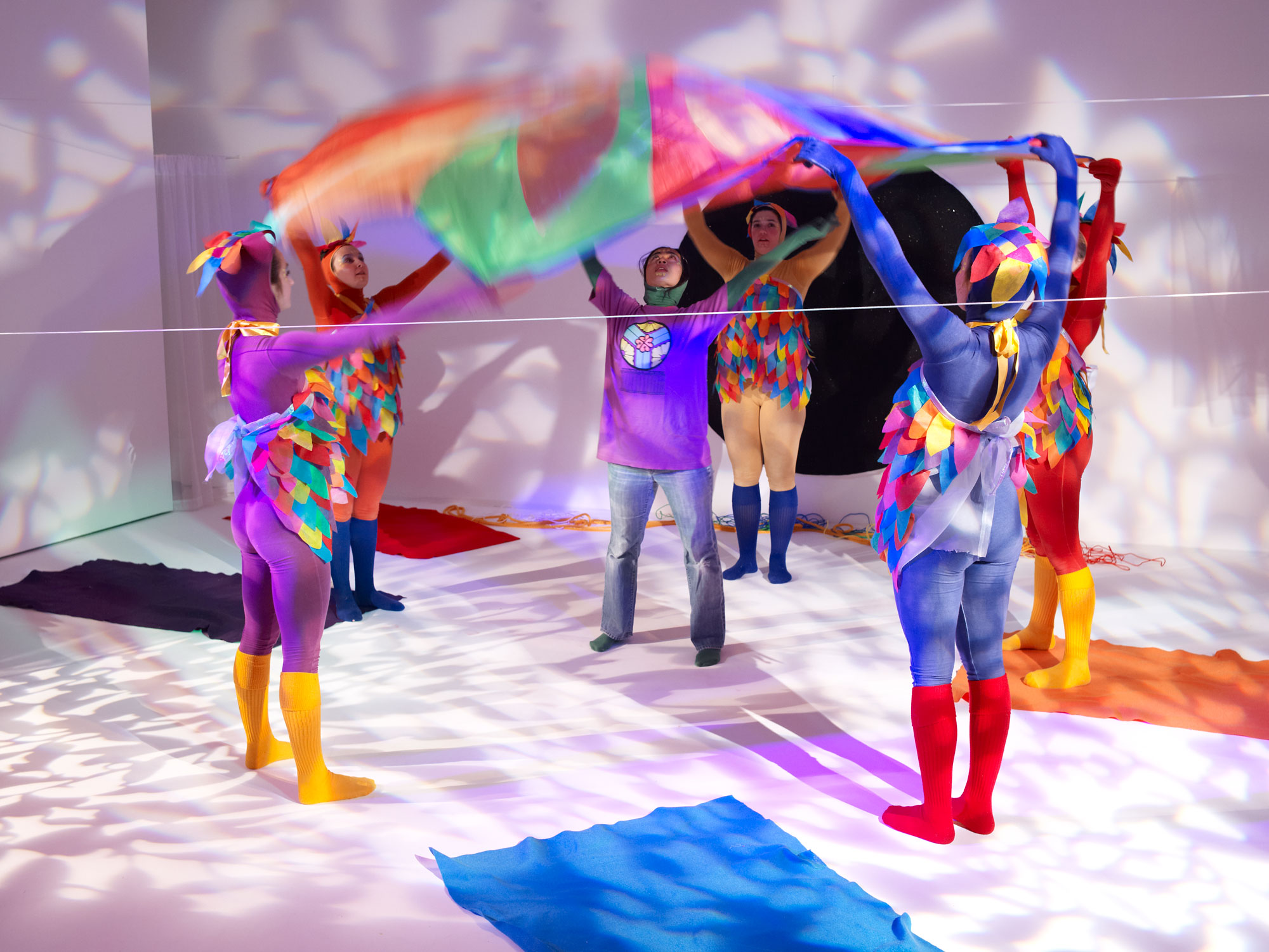
Performance art is one of the primary time-based genres—rooted in experimental theater, dance, and musical performances. Performance is centered on the human body, but is not relegated to just the artist’s body. Experiencing performance as an artist/performer, audience member, and participant is important to understand and appreciate the genre.
Brief
Your performance project will consist of two parts:
The live, real-time performance:
The live performance should be three to five minutes and will be conducted in front of the class in the BFA common space in the JKB. Keep that space in mind. If you need a different space or set up, such as conducting the performance outdoors, consult with the instructor well in advance. If the concept for your performance dictates that the action should take longer than three to five minutes, you may consider the in-class performance to be an excerpt and should be treated as such. Your performance may be collaborative, participatory, and/or directed. If participatory or directed, the instructions and instruction period should be part of the three to five minutes given in class.
A document of a performance:
You should have also conducted the performance prior to class and documented it in some way. This could be through video, photography, and/or some material or object that recorded the performance’s actions. Think carefully about the mode of documentation and how that informs the performance. If the document is time-based, it should be three to ten minutes in total, even if the actual performance is longer. If the document is object-based, it should also be documented through photo/video to be submitted via Learning Suite or it should be submitted in class to the instructor. Be mindful of equipment and set-up you might need in order to appropriately document the performance so that the document is not merely an afterthought or hastily assembled.
Your project should be conceptually grounded, with that central concept informing how the performance is executed. Try to consider the work you are already do and dedicating yourself to. See if there is a way to formulate a performance that is in line with your existing practice so that it might become part of a larger body of work and portfolio. If you want this to be a true experiment and move away from your current body of work, that is also fine and is entirely your choice.
Submission Checklist
Tips and Considerations
Have a central concept that is grounding and informing your work.
Decisions should be made in the interest of the work and not just out of convenience. For example, if you are planning a performance piece that involves you as the central figure, consider what you are wearing, how you move, what is in the space, lighting, etc. Performance is immersive, so you should consider everything within your control.
If you are planning a participatory/collaborative performance, how is the instruction part of the performance and equally considered? What parameters will you set up and how much freedom are you allowing the participants?
Consider the amount of time you are given to work on the project. It is expected that you make full use of that time to realize a complex and deeply involved project.
Budget 5–10% of your time as slush in case of emergencies, technological glitches, etc.
Consider what equipment you may need to check out from the stockroom in advance. Remember tech checkout is first-come-first-served, so you may want to reserve equipment in advance and do not wait until the last minute when everyone else is checking out equipment for final exhibitions and final projects.
How will you document this performance? What equipment will you need? What lighting conditions will you require? Do you need to check out lights?
Will the document require multiple camera angles, editing, collecting sound from a source other than the camera, specific weather conditions, etc.?
Equipment
Be mindful of the equipment you use, the requisite storage cards, and types of inputs to accommodate different microphones or devices.
Late Policy
The live performance cannot be submitted late except in case of illness or family death. The documentation and self-assessment may be submitted late at a penalty of 5 points per day. If you are late to the final critique, you will lose 5 points.
Grading
Assignment grades will be based on the following:
Conceptual Concerns (40%)
Student demonstrates evidence that they understand and inventively integrate conceptual concerns. The student’s research is evident and ample given the allotted time.
Excellent: Student demonstrates conversational familiarity with the material—making interesting connections between material.
Average: Student is able to relate material, but not do much interesting with it.
Below Average: Student struggles to demonstrate a grasp of the material and shows no facility in connecting ideas or new thinking.
Execution (40%)
When selecting a thesis or POV, the student is able to succinctly and plainly build a case using good storytelling techniques.
This includes proper spelling, punctuation, sentence structure, grammar and formatting for written assignments; and annunciation, confidence and focused arguments for oral assignments.
Excellent: Student understands modes of writing and presentation including style guides and is able to nimbly employ these tools in their writing and speaking.
Average: Student makes some stylistic and formatting mistakes by ignoring provided guidance.
Below Average: Student repeatedly makes the same mistakes and ignores instructor input and suggestions.
Assessment/Critique (10%)
The student will produce a self-evaluation for each art project including the strengths and weaknesses of a given work and plans for future improvement. This will also include an accounting of time taken. The student will also be present for and participate in group critiques of projects.
Excellent: The student thoughtfully and honestly engages in the self-reflective process of critiquing their own work and efforts. The student enthusiastically engages with group critiques, seeking ways to offer constructive feedback to other students.
Average: The student performs a cursory and surface-level assessment of their work and efforts. They make neutral comments during the group critiques and do not fully engage.
Below Average: The student demonstrates an inability to honestly engage with their work as it exists in the world, and does not adequately participate in group critiques, or is absent/tardy.
Following Instructions (10%)
The student adheres to the guidelines provided for the course and the assignment. If the paper has a particular framework, the student adheres to that framework. If an assignment is to be submitted as a Word doc on Learning Suite, the student does not email the instructor a PDF.
Excellent: A detail-oriented student who takes instruction and fastidiously executes it within their work.
Average: A student who misses some details because they didn't read instructions thoroughly or take proper notes when instructions were given.
Below Average: Student ignores basic instructions and guidance given for assignments.
Learning Outcomes Addressed
Digital Art History and Practices
Students will develop a working knowledge of digital art practices, including an understanding of the theoretical implications of art in a digital age.
Skills
Students will develop the skills and resources necessary to realize a wide variety of digitally-based projects.
Project
Students will produce a body of work demonstrating a comprehension and engagement with the themes and concepts explored in class.
Development
Students will develop the skills and resources necessary to realize a wide variety of digitally-based projects.
General Practices
Students will develop a working knowledge of digital art practices, including an understanding of the theoretical implications of art in a digital age.
Production
Students will produce a body of work demonstrating a comprehension and engagement with the themes and concepts explored in class.
To help better the class, I ask that you complete a student rating form. Be fair and honest to help me and the course improve. Knowing what works well in the class, as well as what needs adjustment is important to retain what is effective, and alter what needs fine tuning. I appreciate the input.
This assignment cannot be completed late since I have no control over the availability of the student rating form.
With the Soundscape assignment, you worked in recorded time—which is built asynchronously and then replayed synchronously. Now, you will be dealing with real time in a live situation by creating objects that generate sound either through mechanical means, human interaction, or both.
Brief
You will create a sonorous object that is capable of sustaining a one- to three-minute performance through mechanical or human-powered means. No part of your sonorous object should come from something traditionally used in musical instrumentation. The resulting object may be musical in nature, but it should not use any musical instruments or parts. Your sonorous object should be able to noticeably make more than one type of sound, so it may require multiple components or multiple means of activation—for example, one part chimes while another is percussive.
You will bring your object to class to “perform,” and you will also create a one- to three-minute video document of your sound piece. I recommend either recording the sound of the object as it is being activated live to synch with actions happening on screen, or record it for a longer duration, and cut to different views of the object as it is making sounds if it does not need to be synced.
This is meant to be an exploration of the sonic potential of materials. It would be great if this is tied to a concept, but that is not a requirement of the assignment.
You are also required to submit a self-evaluation along with your assignment, so leave enough time to complete the assignment and ruminate on your experience. 10% of your grade is based on your Assessment/Critique—this includes your self-assessment and participating fully in the group critique.
Submission Checklist
Tips and Considerations
Consider the resonance of material and experiment with different items until you find the sound(s) you want. Think about metal sheets, rods, springs, strings/wire, and containers; look at stones; experiment with glass sheets, containers, and parts; explore wood of varying sizes and shapes; try out tubes and air; employ rubber, string, or plastic.
The two different types of sound your piece makes should be noticeably different. Not like rice and small gravel in a tube. That will just become one single sound. You want two distinctly different sounds.
Are there special means to activate these objects like wetted hands, mallets, motors, vacuums, pebbles, wind, etc.
Are you looking for quiet or loud sounds, or a combination?
If your body is in the piece, you are performing, so what will that look like? Consider how you will be in the space and how much of a performance it will be. Will you be wearing a “costume?” Are you going to try to recede into the background and just be an activator of the sound, and not necessarily a performer? What will your gestures and movements be like—large and theatrical, or quiet and small, and how will those impact the sound and the performance?
Consider audience participation and how that might function. Will they make the piece? Are they creating the sound, or occupying the space uniquely, or creating action in some way? This isn’t required, but could add an interesting dimension.
Will this object’s sounds be amplified, and how? By electronic means or acoustic resonance? Is it loud enough on it’s own? Can you create acoustic resonance through chambers, discs, and surfaces?
Are there analogous things out there that can serve as inspiration for your project—wind chimes, wedding cans on a car’s bumper, rain on your car’s roof, a squeaky wheel, etc.?
Will this be a one-on-one experience that is more intimate, or for larger audiences and space? How might that consideration impact the creation of your object and your recording of it?
Consider how you might record the audio? Where might you place the microphones? What types of microphones might you use? Are the in-camera microphones suitable, or do you want to use a Tascam, Zoom, or Sony? What about multiple recordings from multiple distances that can be mixed together?
Think about how you might record the video. What type of lighting you you want? Where will the work be located (indoor, outdoor)? What is in the background? Do you need to show someone interacting with it? Is it performative?
Consider how sound changes based on environment and time—indoor, outdoor, reverberant spaces, dead spaces, daytime, nighttime, rural, urban, etc.
Experiment! Ask yourself “what if” questions and try out those ideas with quick prototypes. What if this were larger, smaller, louder, quieter, with more variance and dynamics, different materials, etc.
Own your decisions. If you want to have a number of motors operating, then get a bunch of motors. Don’t just create a piece with one and talk about how you want it to be bigger or louder. Make these objects well if they need to be made well rather than slapping something together with cardboard and tape (unless your concept calls for it). Don’t just make decisions based on convenience or laziness. Make choices that are informative for the piece.
Use the instructor! Ask questions. Seek input. Brainstorm with them.
Equipment
Be mindful of the equipment you use, the requisite storage cards, and types of inputs to accommodate different microphones or devices.
Late Policy
You will lose 5 points per day (out of 100) for each 24-hour period your assignment is late. You will also lose points for not participating fully in the group critique.
Grading
Assignment grades will be based on the following:
Conceptual Concerns (40%)
Student demonstrates evidence that they understand and inventively integrate conceptual concerns. The student’s research is evident and ample given the allotted time.
Excellent: Student demonstrates conversational familiarity with the material—making interesting connections between material.
Average: Student is able to relate material, but not do much interesting with it.
Below Average: Student struggles to demonstrate a grasp of the material and shows no facility in connecting ideas or new thinking.
Execution (40%)
When selecting a thesis or POV, the student is able to succinctly and plainly build a case using good storytelling techniques.
This includes proper spelling, punctuation, sentence structure, grammar and formatting for written assignments; and annunciation, confidence and focused arguments for oral assignments.
Excellent: Student understands modes of writing and presentation including style guides and is able to nimbly employ these tools in their writing and speaking.
Average: Student makes some stylistic and formatting mistakes by ignoring provided guidance.
Below Average: Student repeatedly makes the same mistakes and ignores instructor input and suggestions.
Assessment/Critique (10%)
The student will produce a self-evaluation for each art project including the strengths and weaknesses of a given work and plans for future improvement. This will also include an accounting of time taken. The student will also be present for and participate in group critiques of projects.
Excellent: The student thoughtfully and honestly engages in the self-reflective process of critiquing their own work and efforts. The student enthusiastically engages with group critiques, seeking ways to offer constructive feedback to other students.
Average: The student performs a cursory and surface-level assessment of their work and efforts. They make neutral comments during the group critiques and do not fully engage.
Below Average: The student demonstrates an inability to honestly engage with their work as it exists in the world, and does not adequately participate in group critiques, or is absent/tardy.
Following Instructions (10%)
The student adheres to the guidelines provided for the course and the assignment. If the paper has a particular framework, the student adheres to that framework. If an assignment is to be submitted as a Word doc on Learning Suite, the student does not email the instructor a PDF.
Excellent: A detail-oriented student who takes instruction and fastidiously executes it within their work.
Average: A student who misses some details because they didn't read instructions thoroughly or take proper notes when instructions were given.
Below Average: Student ignores basic instructions and guidance given for assignments.
Learning Outcomes Addressed
Digital Art History and Practices
Students will develop a working knowledge of digital art practices, including an understanding of the theoretical implications of art in a digital age.
Skills
Students will develop the skills and resources necessary to realize a wide variety of digitally-based projects.
Project
Students will produce a body of work demonstrating a comprehension and engagement with the themes and concepts explored in class.
General Practices
Students will develop a working knowledge of digital art practices, including an understanding of the theoretical implications of art in a digital age.
Production
Students will produce a body of work demonstrating a comprehension and engagement with the themes and concepts explored in class.
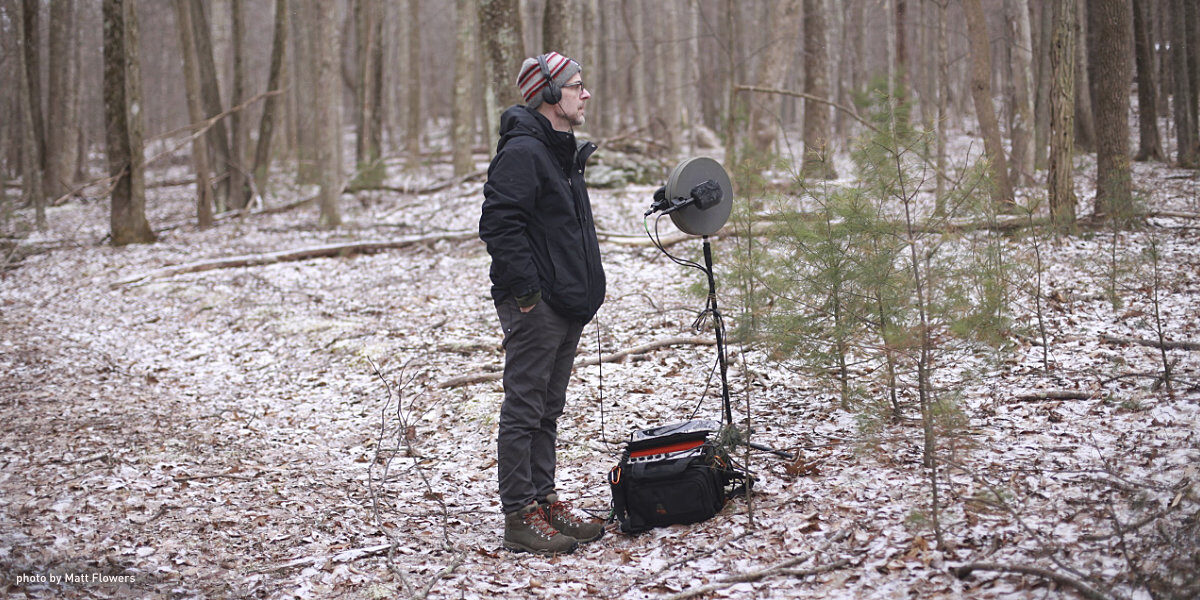
This assignment is designed to better familiarize you with recording and editing technology and methods, and to further hone your listening skills.
Brief
You will create a one- to three-minute soundscape to be listened to on headphones using collected and/or generated sounds. This soundscape should loop seamlessly, meaning that the end of the track should perfectly align with the beginning. This soundscape should take full advantage of and explore the stereo field and the frequency range. You will be required to employ at least two prompts (total) from the strategies and methodologies addressed in class: Sound Manipulation Methodologies, Richard Serra’s Verbs List, or Schmidt and Eno’s Oblique Strategies.
Build your work around a concept. Maybe your concept is documenting a particular space or event. Maybe you are interested in family history, so you collect sounds related to family voices, music, activities, and gatherings. Perhaps you want to think about creating a soundscape to accompany one of your object-based artworks—considering how that artwork might sound, or how sound might augment the experience with that artwork. Your concept may be dealing with the formal aspects of sound, so you should be pushing the sound into interesting areas. Consider where your individual interests lie, and let that guide the sounds you collect and make. Does your concept dictate that the sound will be soft, quiet, and gentle, or loud, aggressive, and dissonant, or will there be a lot of dynamics? Will the sounds be manufactured, collected, natural, or human-made?
You are also required to submit a self-evaluation along with your assignment, so leave enough time to complete the assignment and ruminate on your experience. 10% of your grade is based on your Assessment/Critique—this includes your self-assessment and participating fully in the group critique.
Submission Checklist
Tips and Considerations
Start collecting a variety of sounds without prejudice. Edit down later.
When recording sounds, always record longer than you think you should. It is better to have too much material than not enough.
Record at a very high sample rate and bit depth since you will likely be manipulatig these sounds.
Watch your recording levels, and listen back to your recordings on headphones immediately to make sure things are captured in a way you want.
Consider the types of microphones you will want to use.
Think about how close to your subject you want to get. Maybe record at different distances to give yourself options and to hear how distance impacts the sounds.
Consider how sound changes based on environment and time—indoor, outdoor, reverberant spaces, dead spaces, daytime, nighttime, rural, urban, etc. Where will you collect and make sounds?
Be congnizant of the noises you are making—the sound of your clothes when you shift, the sound your hands make when you adjust your grip on the recording device or microphone, your sniffles, etc.
Keep your phone away from your recording gear, or better yet, turn it off or turn off cellular data, WiFi, and Bluetooth.
If recording sound indoors (ambient, voice, etc.), consider turning off your heat or air conditioning so the fan does kick on during your recording. Be mindful of other sounds that may bleed in: microwaves, planes, helicopters, traffic, roommates, and so on.
Equipment
Be mindful of the equipment you use, the requisite storage cards, and types of inputs to accommodate different microphones or devices.
Late Policy
You will lose 5 points per day (out of 100) for each 24-hour period your assignment is late. You will also lose points for not participating fully in the group critique.
Grading
Assignment grades will be based on the following:
Conceptual Concerns (40%)
Student demonstrates evidence that they understand and inventively integrate conceptual concerns. The student’s research is evident and ample given the allotted time.
Excellent: Student demonstrates conversational familiarity with the material—making interesting connections between material.
Average: Student is able to relate material, but not do much interesting with it.
Below Average: Student struggles to demonstrate a grasp of the material and shows no facility in connecting ideas or new thinking.
Execution (40%)
When selecting a thesis or POV, the student is able to succinctly and plainly build a case using good storytelling techniques.
This includes proper spelling, punctuation, sentence structure, grammar and formatting for written assignments; and annunciation, confidence and focused arguments for oral assignments.
Excellent: Student understands modes of writing and presentation including style guides and is able to nimbly employ these tools in their writing and speaking.
Average: Student makes some stylistic and formatting mistakes by ignoring provided guidance.
Below Average: Student repeatedly makes the same mistakes and ignores instructor input and suggestions.
Assessment/Critique (10%)
The student will produce a self-evaluation for each art project including the strengths and weaknesses of a given work and plans for future improvement. This will also include an accounting of time taken. The student will also be present for and participate in group critiques of projects.
Excellent: The student thoughtfully and honestly engages in the self-reflective process of critiquing their own work and efforts. The student enthusiastically engages with group critiques, seeking ways to offer constructive feedback to other students.
Average: The student performs a cursory and surface-level assessment of their work and efforts. They make neutral comments during the group critiques and do not fully engage.
Below Average: The student demonstrates an inability to honestly engage with their work as it exists in the world, and does not adequately participate in group critiques, or is absent/tardy.
Following Instructions (10%)
The student adheres to the guidelines provided for the course and the assignment. If the paper has a particular framework, the student adheres to that framework. If an assignment is to be submitted as a Word doc on Learning Suite, the student does not email the instructor a PDF.
Excellent: A detail-oriented student who takes instruction and fastidiously executes it within their work.
Average: A student who misses some details because they didn't read instructions thoroughly or take proper notes when instructions were given.
Below Average: Student ignores basic instructions and guidance given for assignments.
Learning Outcomes Addressed
Digital Art History and Practices
Students will develop a working knowledge of digital art practices, including an understanding of the theoretical implications of art in a digital age.
Skills
Students will develop the skills and resources necessary to realize a wide variety of digitally-based projects.
Project
Students will produce a body of work demonstrating a comprehension and engagement with the themes and concepts explored in class.
Development
Students will develop the skills and resources necessary to realize a wide variety of digitally-based projects.
General Practices
Students will develop a working knowledge of digital art practices, including an understanding of the theoretical implications of art in a digital age.
Production
Students will produce a body of work demonstrating a comprehension and engagement with the themes and concepts explored in class.
Detail: A quick project (3–10 minute) responding to the in-class prompt.
Submit via: Learning Suite + in class
File type: Submit appropriate files in class or through Learning Suite
Why?
These Microprojects are designed to encourage quick thinking, marrying concept and execution, and class attendance.
Brief
Over the course of the semester, approximately eight randomly assigned in-class Microprojects will be required. A prompt will be given in class and students will have 3–10 minutes to generate a response and submit in class or on Learning Suite. Projects will be primarily graded on completing the assignment, and randomly selected Microprojects will be graded more thoroughly.
Late Policy
If you are absent when a Microproject is assigned, you have until the beginning of class one week after the assignment is made to submit your Microproject. If an assignment is made in class on Monday, you have until the beginning of class the following Monday to submit the assignment. You may get the prompt from the class lecture/demonstration PDF if available, or from another student. Do not ask the instructor for the missed prompt.
Late assignments are not accepted. You will be allowed to drop one lowest grade for this assignment group.
Learning Outcomes Addressed
Digital Art History and Practices
Students will develop a working knowledge of digital art practices, including an understanding of the theoretical implications of art in a digital age.
Skills
Students will develop the skills and resources necessary to realize a wide variety of digitally-based projects.
Project
Students will produce a body of work demonstrating a comprehension and engagement with the themes and concepts explored in class.
Development
Students will develop the skills and resources necessary to realize a wide variety of digitally-based projects.
General Practices
Students will develop a working knowledge of digital art practices, including an understanding of the theoretical implications of art in a digital age.
Production
Students will produce a body of work demonstrating a comprehension and engagement with the themes and concepts explored in class.
File type: Submit written responses in the text field / submit links to audio/video files in text field
Brief
On weeks in which a reading is assigned, you will be required to submit a reading responses for each reading set. This can be a written response, or an audio/video recording of an oral response. Respond to one of the reading response questions found at the bottom of each reading set. If there is one set of readings for a week, then you should submit one response. If there are two sets of readings in a week, you should submit two separate responses—addressing one question under each reading set. Each response should be 125–250 words or 2–3 minutes. You should make direct references to the required reading(s) within your response(s). Remember, these entries are evidence that you did the readings, completed them, and processed them. Without evidence that you did the work, we cannot give you a proper grade.
Start each response with the number set that corresponds to the reading set and the response question to which you are responding. For example, if you are responding to the week 3.2 reading set, then start your response with “3.2” at the top of your response. If the question you are addressing is, “What did you learn this week? What are you still stuck on?,” add that next, but after the number of the reading set. Do the same thing orally if recording your response as audio/video. This helps us contextualize your remarks.
If you completed no readings in a given week, do not enter anything in the field on Learning Suite.
Tips
Plagiarism is not allowed. Most of the time I see this, it is due to not properly citing quotes or thoughts that are not your own. If a quote or idea is not coming directly from the reading addressed in your response, then you need to create a footnote with the proper attribution.
Do not use AI to generate any part of your response.
Always review your writing after you are done to help spot errors. Make edits appropriately.
If you are submitting a written response, I recommend writing out and saving your response in a word processor as you go. Once you are done, then copy and paste your response into Learning Suite. You do not want to lose your work if Learning Suite glitches and doesn’t save your response.
Responses will be randomly examined over the course of the semester. I will not be going over these with a fine tooth comb, but please be attentive to your presentation, writing, punctuation, and formatting. Egregious errors will be corrected and result in a reduced grade.
Example
2.1: If hardware and software keeps changing faster, then what does that mean for the programmers, engineers, and industrial designers vs. the artists?
Based on the videos I watched on the Linotype machine and letterpress, industry seems primarily concerned with keeping up with technology, whereas artists seem to relish delving into outdated practices. It is artists who are preserving the machines and producing work using them. Industry has moved onto giant offset lithography machines. Even Risography is outdated, but artists have resurrected it. So, for people working in commercial fields, they need to be able to keep up with the latest advancements. That will mean more training, and that the new advancements will still have to behave a bit like the old advancements to keep the learning curve low. It was a bit sad watching Farewell ETAOIN SHRDLU, the documentary on the NY Times printers, because I kept thinking that most of these people worked most of their lives on the same process, and were just born at the wrong time to get their knowledge and skills thrown to the scrap heap as new methods were adopted. As for artists, they seem to work at their own pace.
That being said, there are a lot of artists who are working at the cutting edge of tech and help to push both culture and technology forward. Those artists need to be OK with their work being inaccessible in 10–20 years as old software and hardware are abandoned, or the artists need to also build methods of archiving their work.
Learning Outcomes Addressed
Digital Art History and Practices
Students will develop a working knowledge of digital art practices, including an understanding of the theoretical implications of art in a digital age.
Development
Students will develop the skills and resources necessary to realize a wide variety of digitally-based projects.
General Practices
Students will develop a working knowledge of digital art practices, including an understanding of the theoretical implications of art in a digital age.
This exam will cover material found in the syllabus and is open “book.” The object is to familiarize each student with the course policies, expectations, and location of pertinent information.


 Stephen Vitiello (photo by Matt Flowers) (